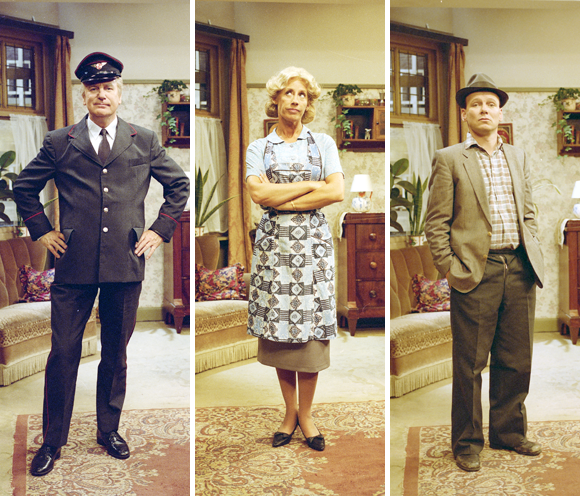
The Golden Age of Dutch Comedy: Toen Was Geluk Heel Gewoon's 15-Year Run
For fifteen remarkable years, from its premiere on January 2, 1994, until its emotional farewell on June 3, 2009, the Dutch comedy series
Toen Was Geluk Heel Gewoon captivated audiences across the Netherlands. This beloved sitcom, whose title translates to "Back Then, Happiness Was Very Normal," carved out an indelible niche in Dutch television history, becoming a cultural touchstone that resonated with generations. Centered around the working-class Koos Koets (Gerard Cox) and his ever-patient wife Nel (Joke Bruijs), the series offered a humorous, often poignant, glimpse into everyday life in Rotterdam, brilliantly adapting the classic American sitcom
The Honeymooners for a uniquely Dutch sensibility. Its incredible longevity, spanning 16 seasons and 227 episodes, speaks volumes about its enduring appeal and the deep connection viewers felt with its relatable characters and timeless humor.
The Enduring Charm of Toenwasgelukheelgewoon: A Legacy Unpacked
The success of
Toen Was Geluk Heel Gewoon wasn't just about its impressive run; it was about the heart and humor that sustained it. The series was a masterclass in observational comedy, drawing its laughs from the mundane yet universal struggles of marriage, friendship, and navigating the complexities of a changing world. Set in the 1970s and 80s, the show offered a nostalgic trip for many, reflecting on a simpler time with a witty, often satirical, edge. Koos, with his outlandish schemes and grand pronouncements, was the perfect foil for Nel's pragmatic wisdom and sardonic wit. Their dynamic, supported by a stellar ensemble cast including Sjoerd Pleijsier as their neighbor Cor and Mouna Goeman Borgesius as his wife Lea, created a world that felt both familiar and hilariously exaggerated.
Produced by the Katholieke Radio Omroep (KRO) in collaboration with Endemol, the series aired primarily on NPO 1 and NPO 2, quickly becoming a staple of Dutch television. Its popularity wasn't merely confined to viewership numbers; it garnered critical acclaim, culminating in the prestigious
Gouden Televizier-Ring award in 1999. This award, voted by the public, cemented its status as a national favorite and underscored the profound impact it had on the cultural landscape. The series' ability to blend heartwarming moments with sharp comedic timing ensured its place in the hearts of millions, making the phrase "Toen Was Geluk Heel Gewoon" synonymous with classic Dutch humor and a reflection of a bygone era. For those interested in a deeper dive into the show's origins and impact,
Toen Was Geluk Heel Gewoon: A Look Back at the Beloved Dutch Series offers further insights.
Beyond the Laughter: Key Moments and Milestones
Over its 15-year tenure,
Toen Was Geluk Heel Gewoon celebrated many milestones and experienced moments that reflected its deep connection to its audience and the broader entertainment industry. The consistency of its core cast, particularly Gerard Cox and Joke Bruijs, was a significant factor in maintaining the show's beloved status. Their on-screen chemistry was palpable, evolving over the years and allowing for rich character development that kept the storylines fresh and engaging.
One such significant moment occurred when actress Ella Snoep, who played a memorable guest role as housekeeper Elly van der Dood in the episode "De N.V. Jaap Kooiman," passed away at the age of 83. Her contribution, along with numerous other guest stars and recurring characters like George van Houts and Brigitte Baake, added layers to the series' vibrant world. Such events, while somber, highlight the human element behind the production and the community it fostered both on and off screen.
The series' grand finale on June 3, 2009, was a highly anticipated event. The KRO bid farewell to the iconic show with a special evening featuring a compilation episode titled "Nu is geluk nooit meer gewoon" (Now happiness is never normal anymore), followed by the very last new episode, "De rek is er uit" (The stretch is over). This dual send-off provided both a nostalgic look back and a definitive conclusion, allowing fans to say goodbye to Koos and Nel in a memorable fashion. The ending of such a long-running show often leaves a void, and the immediate aftermath saw dedicated fan sites, like one that announced its closure stating, "Now that Toen Was Geluk Heel Gewoon has truly ended, we at this site are also stopping," reflecting the profound impact the series had on its community.
The Ultimate Collector's Item: Unearthing the Final DVD Box
For dedicated fans and collectors, the end of a beloved series often brings with it the quest for physical media to preserve its memory.
Toen Was Geluk Heel Gewoon was no exception, and the release of its final DVD box was a highly anticipated event, offering an unparalleled collection of the show's legacy. This ultimate edition, made available for reservation through the KRO's webshop, was more than just a compilation of episodes; it was a treasure trove for enthusiasts.
The final DVD box included
seventeen regular episodes, carefully selected to represent the breadth and humor of the series. However, the true gem for many collectors was the inclusion of
"De Verloren Zoon" (The Lost Son) – an episode that, for various reasons, had never been aired during the show's original run. This exclusive content offered a rare glimpse into a part of the
Toen Was Geluk Heel Gewoon universe that few had ever seen, adding significant value to the collection.
Beyond the unaired episode, the KRO ensured that this final box was truly special by packing it with exclusive extras, providing a deeper dive into the show's themes and cultural context. These special features included:
- De bijna doodervaring (The Near-Death Experience)
- Radio Veronica
- De vuile rolls (The Dirty Rolls)
- Juliana (referencing the former Dutch Queen)
- Apartheid
- Autoloze zondag (Car-Free Sunday)
- 't Rooie gevaar (The Red Menace)
- Ik hou van Holland (I Love Holland)
- Dean Martin
- De depressietest (The Depression Test)
- Punt 10 (Point 10)
- Cabaret
- Bar gezellig (Very Cozy/Sociable)
- All you need is love
- Sonja (likely referring to Sonja Barend, a famous Dutch talk show host)
- De stille kracht (The Hidden Force, a famous Dutch novel)
- Nu is geluk nooit meer (Now happiness is never again – the title of the finale compilation)
These extras highlight the show's clever integration of contemporary events, cultural references, and timeless comedic sketches, showcasing its relevance and wit beyond just the main storylines. For fans eager to explore this rare collection,
Beyond the Finale: Discovering Toen Was Geluk Heel Gewoon's Rare DVD Box offers a detailed look at its unique contents. This comprehensive DVD release stands as a testament to the show's enduring legacy and its place as a cherished piece of Dutch television history.
A Timeless Reflection of Dutch Society
What made
Toen Was Geluk Heel Gewoon resonate so deeply with its audience for 15 years? Beyond the masterful performances and sharp writing, it was the series' ability to reflect a specific era of Dutch society with warmth, humor, and a touch of realism. The show tackled themes that were universal – love, friendship, financial struggles, and the absurdity of daily life – but always through a distinctly Dutch lens. Koos and Nel's modest Rotterdam home became a stage where the triumphs and tribulations of the common person were played out, allowing viewers to see themselves, their neighbors, and their families mirrored in the characters' experiences.
The series' adaptation of
The Honeymooners was not a mere copy; it was a clever reinterpretation that infused the premise with Dutch cultural nuances, humor, and social commentary. It explored the dynamics of working-class life, the changing social norms of the 70s and 80s, and the eternal quest for happiness in ordinary circumstances. This blend of familiarity and unique local flavor ensured that
Toenwasgelukheelgewoon remained fresh and relevant throughout its remarkable run. Its legacy is not just one of comedic excellence but also of cultural preservation, offering a heartwarming time capsule of a significant period in Dutch history.
Conclusion: The Enduring Smile of Toen Was Geluk Heel Gewoon
Fifteen years on air, 227 episodes, a prestigious award, and an unforgettable cast –
Toen Was Geluk Heel Gewoon stands as a monumental achievement in Dutch television. It wasn't just a comedy series; it was a cultural phenomenon that brought laughter, comfort, and a sense of shared experience into Dutch homes for over a decade and a half. From Koos's grand schemes to Nel's grounded wisdom, the characters became like family, their stories echoing the lives of millions. Even after its final episode aired, the spirit of
Toen Was Geluk Heel Gewoon lives on, a testament to the power of well-crafted storytelling and humor that truly transcends time. Its golden age may have concluded, but the happiness it brought remains, proving that some things, truly, never go out of style.